Pусский
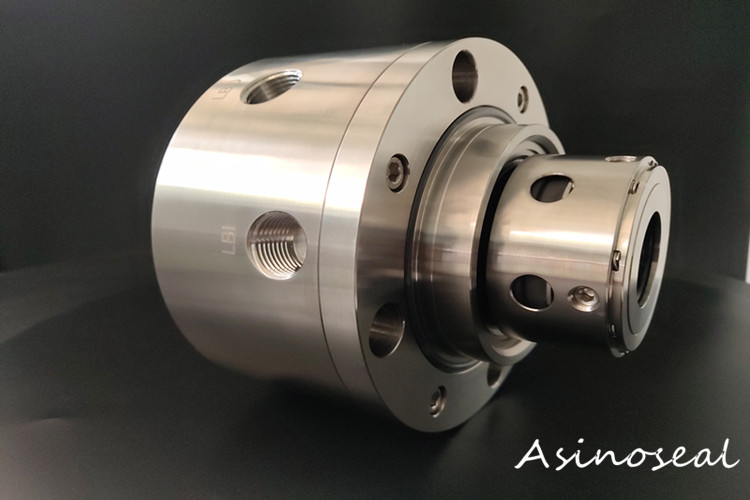
Among the commonly used ceramic materials for mechanical seals in pump shaft sleeves, zirconia ceramics occupy an important position due to their significant performance advantages. They have high hardness, wear resistance that is 15 times that of alumina ceramics, a friction coefficient that is only half that of alumina ceramics, and higher density (density 6 vs. alumina ceramics 3.5). After grinding, the surface finish reaches above ▽9, presenting a mirror-like appearance, which can effectively reduce friction and extend the service life of related components. At the same time, zirconia ceramics have good toughness, overcoming the brittleness defects of traditional ceramics, and are widely used in fields such as mechanical seals and ball milling media. Ceramics such as 95 ceramics and 99 ceramics in alumina ceramics, as well as steatite ceramics (mainly composed of MgO·SiO₂), are also commonly used to make insulation-related components and high-frequency insulators due to their high insulation properties and good chemical stability.
Analysis of leakage causes of mechanical seals with shaft sleeves for pump
1. Leakage during static test during installation
When the leakage is minor, it often indicates a problem with the rotating or stationary sealing ring; a larger leakage indicates a problem between the rotating and stationary ring friction pairs.
Observe by manually turning the gear. If there is no significant change in the leakage amount, there may be a problem with the static and dynamic sealing rings; if the leakage amount changes significantly, it can be concluded that there is a problem with the friction pair between the dynamic and static rings.
Leakage medium sprays axially, often indicating a problem with the rotating sealing ring; spraying in all directions or emerging from cooling water holes often indicates failure of the stationary sealing ring.
2. Leakage during trial operation
During operation, due to abnormal conditions such as air entrainment, cavitation, and pressure buildup, significant axial forces are generated, causing the surfaces of the rotating and stationary rings to separate.
During installation, excessive compression caused severe damage and abrasion to the inner hole of the friction pair; the sealing ring of the rotating ring was too tight, and the spring could not adjust the radial fluctuation of the rotating ring.
The static sealing ring is too loose, causing the static ring to detach from the static ring seat when the dynamic ring fluctuates radially; particulate chemical substances in the working medium enter the flaw detection sealing inner hole of the friction pair; the design selection is incorrect, resulting in a low specific pressure in the sealing inner hole or a high cold shrinkage of the sealing material.
3. Sudden leakage during normal operation
Damage to the seal due to air leakage, cavitation, or prolonged pressure buildup; the actual output of the pump is low, and the heat accumulated from the medium circulating inside the pump causes the medium to vaporize, resulting in ineffective sealing.
The backflow volume is slightly large, causing sediment at the bottom of the vessel on the suction pipe side to rise and damage the sealability; when restarting after a long period of operation stoppage without manually opening the gate, the friction pair is torn due to adhesion and damage to the protruding surface.
Increase in corrosive, polymeric, and gel-forming chemicals in the medium; significant changes in operating temperature, frequent changes or adjustments in operating conditions, as well as sudden power outages or fault shutdowns.