Pусский

With the development of modern industries, especially oil and gas field development, mining, metallurgy, electric power, papermaking, fine chemicals, salt chemicals, water supply and drainage, sewage treatment, food processing, and other industries, more and more pumps are used to transport solid particles.
Solid particle impurity media are roughly classified as follows:
(1) Classified by rheology
① Bingham fluids such as paint, asphalt, clay mud, etc.;
②Pseudo plastic fluids such as polymer solutions and melts, starch slurry, cellulose esters, glass solutions, etc.;
③Expansive fluids such as starch and water, mica and water, a mixture of sand and water in an appropriate proportion.
(2) Classified by physical properties
① Dissolved granular media, such as various salt solutions, molten urea, sugar solutions, chromosomes, chemical liquids, etc., these media will precipitate crystals or produce coagulum due to temperature changes;
②Insoluble particles, such as slag liquid, water containing sand and gravel, coal slurry, drilling fluid, etc.;
③Fiber slurry media, such as feces, paper slurry, fiber slurry, etc., inside which light fibers mostly suspended in the liquid exist
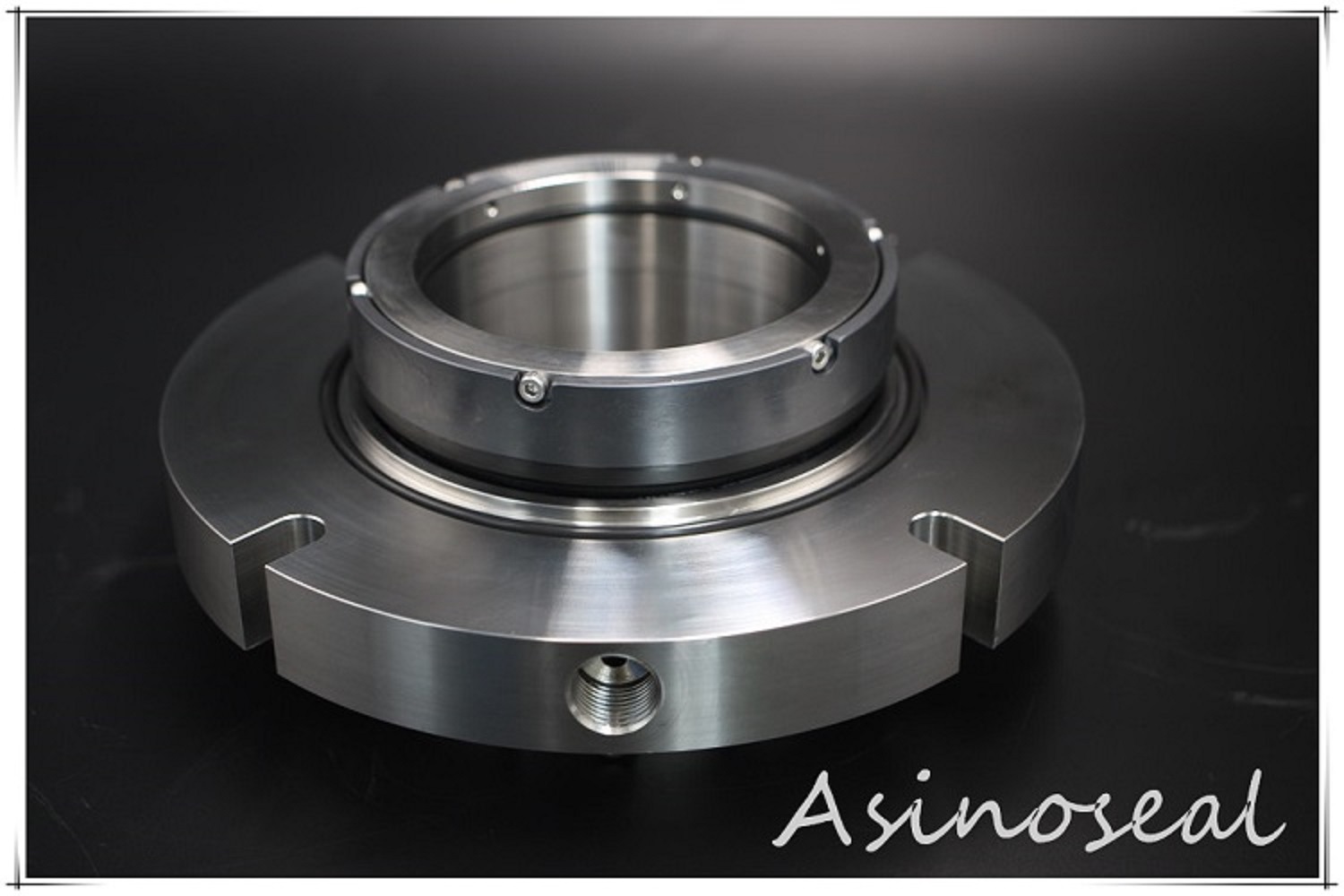
Fluid medium containing solid particles and fibers is very unfavorable to the operation of the mechanical seal of the pump. When the solid particles in the fluid medium enter the end faces of the friction pairs of the mechanical seal, wear and leakage of the sealing surfaces will be aggravated. The solid particles deposited around the mechanical seal can also interfere with the function of the seal and cause the seal to fail. Similarly, fibrous substances entering the end faces of the seal will also cause serious leakage of the seal.
Solid particle impurity media are roughly classified as follows:
(1) Classified by rheology
① Bingham fluids such as paint, asphalt, clay mud, etc.;
②Pseudo plastic fluids such as polymer solutions and melts, starch slurry, cellulose esters, glass solutions, etc.;
③Expansive fluids such as starch and water, mica and water, a mixture of sand and water in an appropriate proportion.
(2) Classified by physical properties
① Dissolved granular media, such as various salt solutions, molten urea, sugar solutions, chromosomes, chemical liquids, etc., these media will precipitate crystals or produce coagulum due to temperature changes;
②Insoluble particles, such as slag liquid, water containing sand and gravel, coal slurry, drilling fluid, etc.;
③Fiber slurry media, such as feces, paper slurry, fiber slurry, etc., inside which light fibers mostly suspended in the liquid exist
Fluid medium containing solid particles and fibers is very unfavorable to the operation of the mechanical seal of the pump. When the solid particles in the fluid medium enter the end faces of the friction pairs of the mechanical seal, wear and leakage of the sealing surfaces will be aggravated. The solid particles deposited around the mechanical seal can also interfere with the function of the seal and cause the seal to fail. Similarly, fibrous substances entering the end faces of the seal will also cause serious leakage of the seal.