Pусский
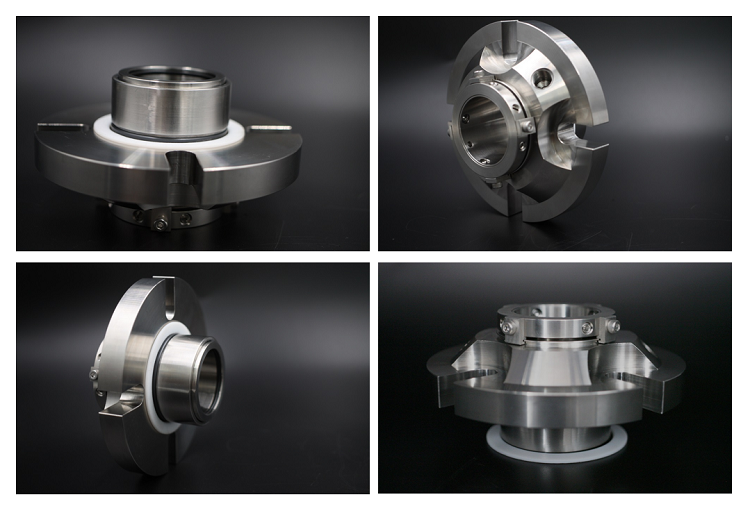
The reactor is a comprehensive reaction vessel, and the pressure generated during the reaction has extremely high requirements on the sealing of the vessel. The common faults and solutions of agitator mechanical seals are as follows:
1.Faults and Treatment of Mechanical Seal Parts
Causes and symptoms of failure:
During the operation of the reactor, the sealing end faces of the mechanical seal are often subject to wear, thermal cracking, deformation, damage, etc., and the screw, thread, and spring will loosen, break and corrode after a long time. Auxiliary seals of the mechanical seals will also be cracked, twisted and deformed, cracked, etc.
Causes and symptoms of failure:
During the operation of the reactor, the sealing end faces of the mechanical seal are often subject to wear, thermal cracking, deformation, damage, etc., and the screw, thread, and spring will loosen, break and corrode after a long time. Auxiliary seals of the mechanical seals will also be cracked, twisted and deformed, cracked, etc.
Troubleshooting method If the parts of the mechanical seal fail, it is necessary to replace the parts or improve the machining accuracy of the parts. Improving the machining accuracy of the mechanical seal itself and the machining accuracy of other parts of the reactor is very beneficial to the performances of the mechanical seal.
In order to improve the sealing effect, the smoothness and flatness of the friction surfaces of the rotary face and the stationary seat of the mechanical seal are highly required. The width of the friction surface of the friction pair of the mechanical seal is not large, generally between 2 and 7 mm.
If you want to view other products,pls visit this website & https://www.aefluidtec.com/
2.Causes and treatment of mechanical seal vibration and heating
Failures Causes and symptoms of failure
During the operation of the reactor, it is subject to mechanical wear and chemical erosion, which will make the contacting end faces of the friction pair of the mechanical seal rough, and the gap between the friction pair and the sealing cavity of the mechanical seal is too small, and vibrations are caused by collisions caused by vibration.
Failures Causes and symptoms of failure
During the operation of the reactor, it is subject to mechanical wear and chemical erosion, which will make the contacting end faces of the friction pair of the mechanical seal rough, and the gap between the friction pair and the sealing cavity of the mechanical seal is too small, and vibrations are caused by collisions caused by vibration.
Sometimes due to the poor temperature resistance (corrosion resistance and) of the sealing end face, or insufficient cooling or the end face contains particles of impurities during installation, vibration and heat generation of the mechanical seal will also be caused.
Troubleshooting method
If the gap between the friction pair and the sealing chamber of the mechanical seal is too small, it is necessary to increase the inner diameter of the sealing chamber of the mechanical seal or reduce the outer diameter of the rotation to ensure a gap of at least 0.75mm.
If the gap between the friction pair and the sealing chamber of the mechanical seal is too small, it is necessary to increase the inner diameter of the sealing chamber of the mechanical seal or reduce the outer diameter of the rotation to ensure a gap of at least 0.75mm.
If the friction pair is improperly matched, the materials of the rotary face and/or stationary seat of the mechanical seal must be changed to make them resistant to temperature and corrosion. This reduces vibration and heating of the mechanical seal.