Pусский


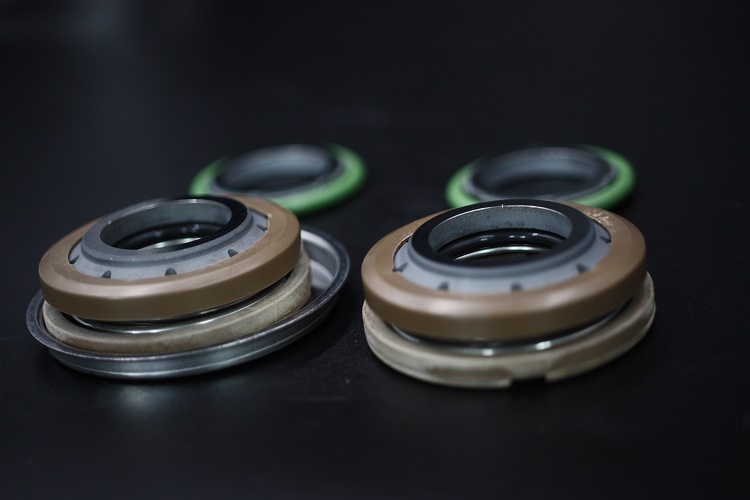
Flygt 3102 Pump Mechanical seal is not only one model of Flygt pump seals that we can make

About Us:
Asinoseal is a manufacturer and service provider committed to providing customers with professional and efficient mechanical seals. It manages to provide these high quality goods in a quick manner to win customers' consistent praise and high trust. In our warehouse, you can see a wide variety of neatly-arrayed sealing products ranging from kalraz O ring, pump sleeve,mech seal parts,component mechanical seals to customized cartridge mechanical seal,split seal,agitator seal & ect. How about try some small items with Asinoseal brand as the 1st step?

Background Knowledge:
How is flushing——the most important auxiliary facility of mechanical seal - carried out?
Auxiliary facilities for mechanical seals refer to lubricating, cooling or temperature-regulating, flushing, purifying, diluting and flushing away the leakage medium to improve the working environment of the mechanical seal by means of flushing, cooling, filtering and separation.
The primary mode of operation of all ancillary facilities of the mechanical seals is flushing. There are two ways for the flushing fluid to enter the seal chamber: single-point flushing and multi-point flushing. Single-point flushing: the flushing liquid is flushed from one outlet, and can be divided into three types: radial, axial and tangential.
Radial flushing: the sealing fluid flushes the friction pair of the mechanical seal vertically along the radial direction, with a simple structure, and is a method that is widely used. However, the amount of flushing should not be too large to prevent the graphite ring from being flushed out of the gap.Axial flushing: the sealing fluid enters the sealing cavity along the axial direction, avoiding the erosion of the graphite ring, and can be used in pumps with corrosive media. Tangential flushing:Tangential flushing: The flushing fluid flushes the friction pair of the mechanical seal along the tangential direction, which is a better way in single-point flushing.
The structure of single-point flushing is simple, but the temperature distribution around the mechanical seal is uneven. In order to avoid eroding the graphite ring of the mechanical seal, the flow rate of the radial flushing liquid flowing into the sealing chamber of the mechanical seal should not be higher than 3m/s, and the diameter of the flushing hole should not be less than 5mrn. For this reason, the amount of flushing must be controlled. Tangential flushing makes the temperature of the circumference of the sealing surface tend to be uniform, and also reduces the erosion of the graphite ring of the mechanical seal, which is a recommended method.
Multi-point flushing: The flushing liquid enters the sealed cavity of the mechanical seal at the same time along the multiple small holes distributed at the circumference part, and plays a flushing role.Multi-point flushing overcomes the shortcomings of single-point flushing and makes the temperature distribution around the friction pair of the mechanical seal more uniform. However, the structure is relatively complicated, and a flushing ring needs to be added, with 6 to 8 small holes with a diameter of 3 to 4 mm. Multi-point flushing is used in media that is easy to vaporize, and can also be used in high pv value occasions that generate more frictional heat. The position of the flushing hole should be opened at the friction pair of the mechanical seal as far as possible, so as to better conduct heat away. The single-point flushing cannot be directly aimed at the graphite ring (stationary ring) of the mechanical seal, nor can it be far away from the friction pair, in which case the flushing effect will be weakened.
Then,how to control the amount of flushing in mechanical seal auxiliary facilities?
The amount of flushing can be changed with a throttle valve or controlled with a restricting orifice plate. Since the throttle valve has no concept of quantity, most of them now are replaced by restricting orifice plates. The diameter of the orifice plate can de determined according to the required flushing volume and the pressure difference between the front and back of the orifice plate. In other words, after the aperture/core diameter is determined, once the pressure difference between the front and rear of the orifice plate is set , the flushing volume will be determined & cannot be adjusted.
The calculation method can be used to calculate the pore diameter of the orifice plate approximately according to the orifice plate flow formula, but due to the different structure of the orifice plate, the calculation results need to be corrected through experiments. In this case, it is more convenient to directly use the experimental results. Therefore, the amount of flushing is mostly checked with experimental charts.
There are two types of orifice plates currently in use. One is flange-connected and the other is thread-connected. The flange-connected orifice plate has a simple structure and is easy to assemble and disassemble. It is a circular plate with a thickness of 4~6mm & has a"tail"for easy installation, and is stamped with a numerical value of the aperture. Usually it is made of stainless steel.
The amount of flushing that does not need to be cooled is not strictly controlled, and the amount of flushing that is used after being cooled is required to be more accurate, which involves the amount of cooling water and the temperature after cooling. If the amount of flushing is small and the diameter of the orifice plate cannot be too small (in that case easy to block), then the method of connecting orifice plates in series can be used. When self-flushing is used, an orifice plate is installed at the outlet of the pump, and another orifice plate is installed after passing through the cooler. The flow through two series-connected orifice plates is about 70% of the flow rate of the case when only one orifice plate is used. See the figure below for the threaded connection orifice. It is equivalent to a nozzle, and the difference with the former is that the orifice plate is longer.
Send Message
Related Products